St. John Industrial Group members are proud to work and live in St. John the Baptist Parish. The people of the Louisiana River Region, particularly in St. John the Baptist Parish, share a special and unique spirit of community. Yes, students graduating high school may go away for college, but it seems most are drawn back home to where they grew up and now choose to raise their own families. What a great place to live and work where generations of families reside!
Community is more than a neighborhood or parish. It involves a willingness to help each other in times of need and celebrate with each other and experience joy in good times. From high school ball games and church services to festivals and parades, St. John sets the bar to a vibrant community. A life lived in St. John the Baptist Parish is a live well-lived. Living in this community offers abundant opportunities, good food, faithfulness, and second chances. In the case of floods and hurricanes, even third chances are commonplace.
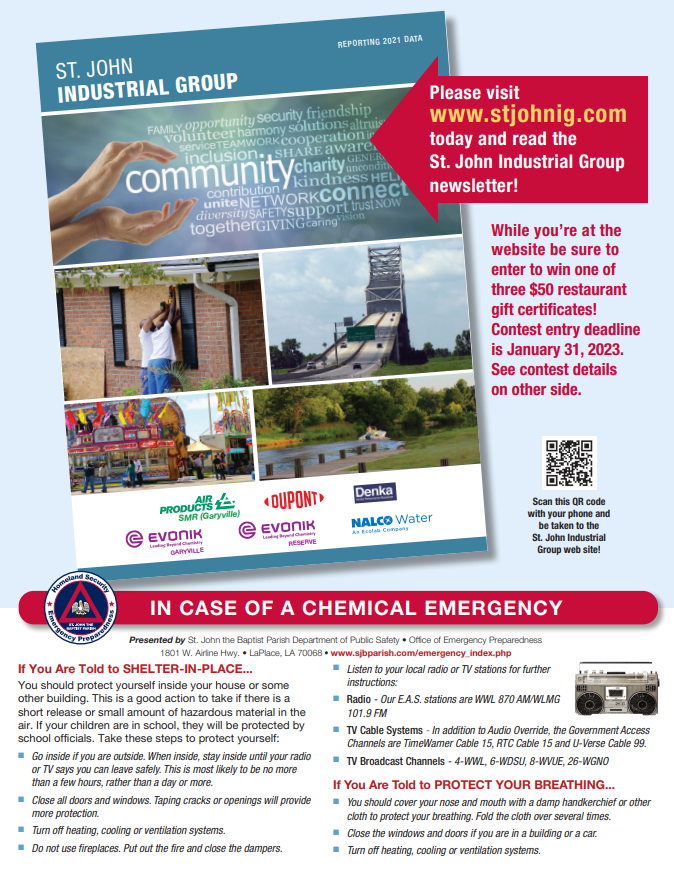
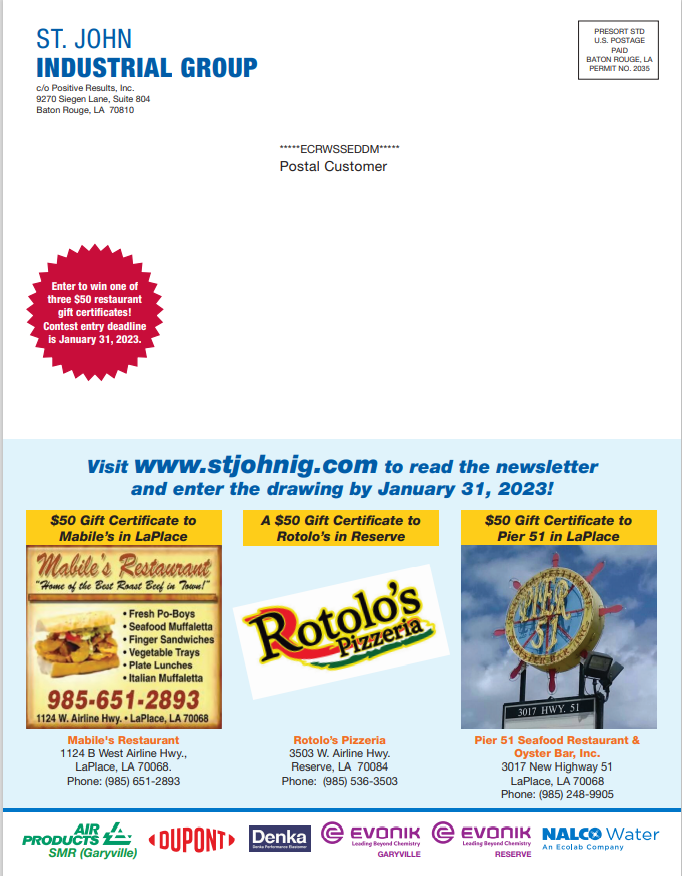
Air Products, Denka Performance Elastomer, DuPont, Evonik – Garyville, Evonik – Reserve and Nalco Water come together each year in this forum to share their accomplishments, outreach, and emissions. Each company and people in these companies give back with donations, assistance, time and caring. From STEM events where fun, science, and learning go hand-in-hand to support for food, St. John Industrial Group members give generously. After a natural disaster, St. John Industrial Group companies not only rebuild their facilities, they assist their employees in their personal recovery and the community at large with kindness and contributions. Community is more than teamwork, though cooperation and common goals are important. Community is friendship, dedication, and unity. This annual website reporting, the annual Household Hazardous Materials Collection Day which returns April 22, 2023 and active membership in the St. John Local Emergency Planning Committee (LEPC) are three activities where St. John Industrial Group members are involved in serving. These activities are illustrative of our commitment to safety, the environment, and community dedication. As you read this, it should be evident that “community”, “together” and “responsibility” are vital to each member company. Both as individual companies and together as St. John industry, they value and strive for lower emissions, sustainability and continuous improvement. The individuals inside each company and the Environmental, Safety and Health employees are devoted to community and devoted to YOU. As we did in the past two years with great success and enthusiasm, this year we will again distribute information on the St. John Industrial Group website at www.stjohnig.com complete with a restaurant gift card giveaway. To encourage everyone to review the 2021 emission data and receive our COMMUNITY message we will include a local restaurant $50 gift card giveaway to six lucky St. John Parish resident winners. It’s fun and helps support local restaurants. Please read the newsletter online in its entirety, then enter to win the gift card giveaway. Thank you. |
ST. JOHN INDUSTRIAL GROUP ANNOUNCES SIX LOCAL RESTAURANT GIFT CARD WINNERS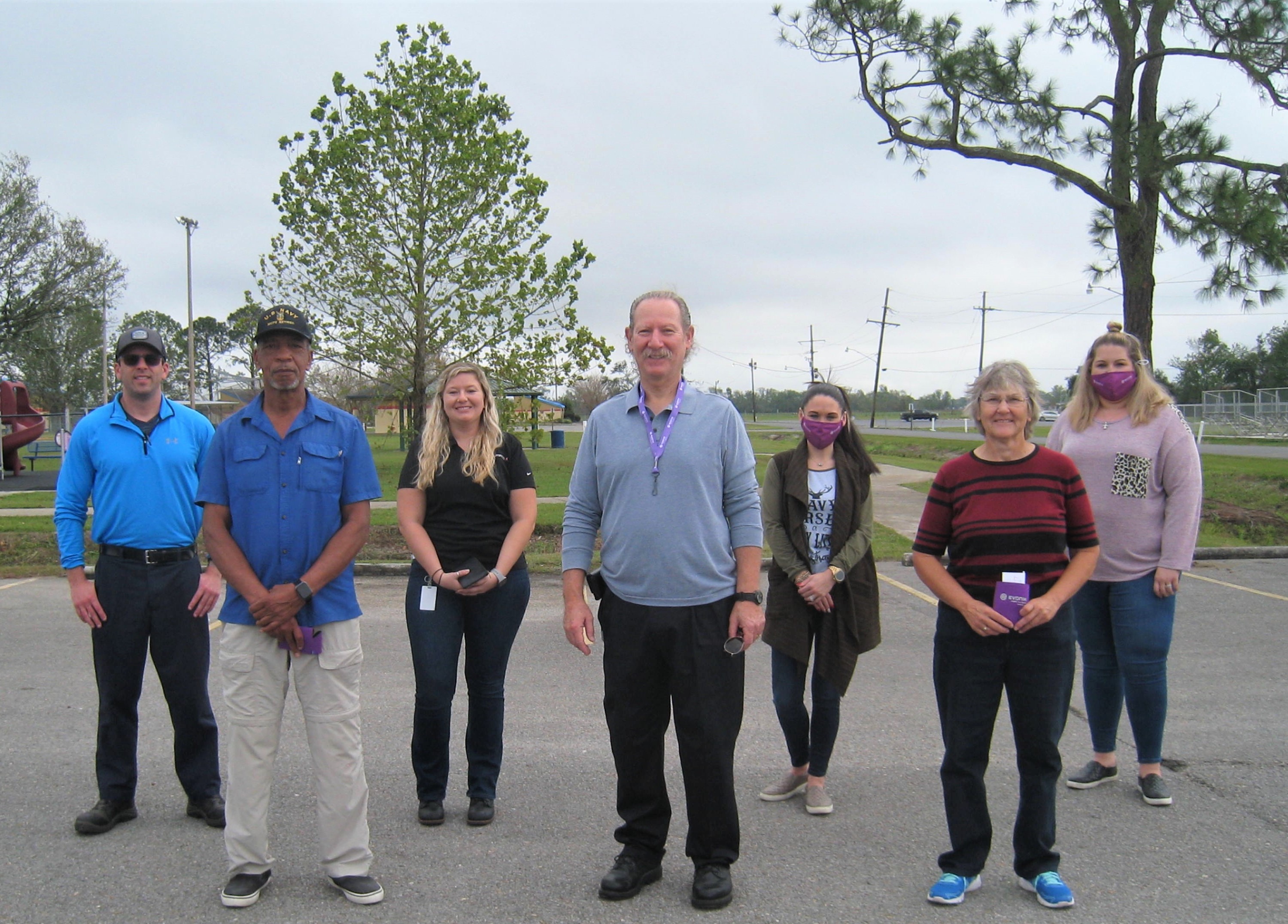
2021 St. John Industrial Group restaurant gift card prize winners and St. John Industrial Group member representatives. Left to right: Colby Laiche, ChampionX Production Team Leader; prize winner Alvin Harding, Jr.; Ashley Hill, ChampionX Site Manager; prize winner Richard Stricks; Brittany Breaux, Evonik – Reserve, EHSS Manager; Denise Richard, prize winner; and Jennifer Sparks, Evonik – Reserve Plant Admin. (Not pictured: Three winners were unavailable for the prize distribution.) Read entire press release on Community Page. (click here) |